What you are trading
Take the tourA prediction market asks a yes-or-no question about the real world, like “Will X happen by March?” Both answers trade as shares priced between 1¢ and 99¢, and the price is the market's probability. Buy yes at 30¢ and each share pays $1 if it happens and nothing if it does not. Your job is to find prices that look wrong. More in What this is.
1. Place your first trade
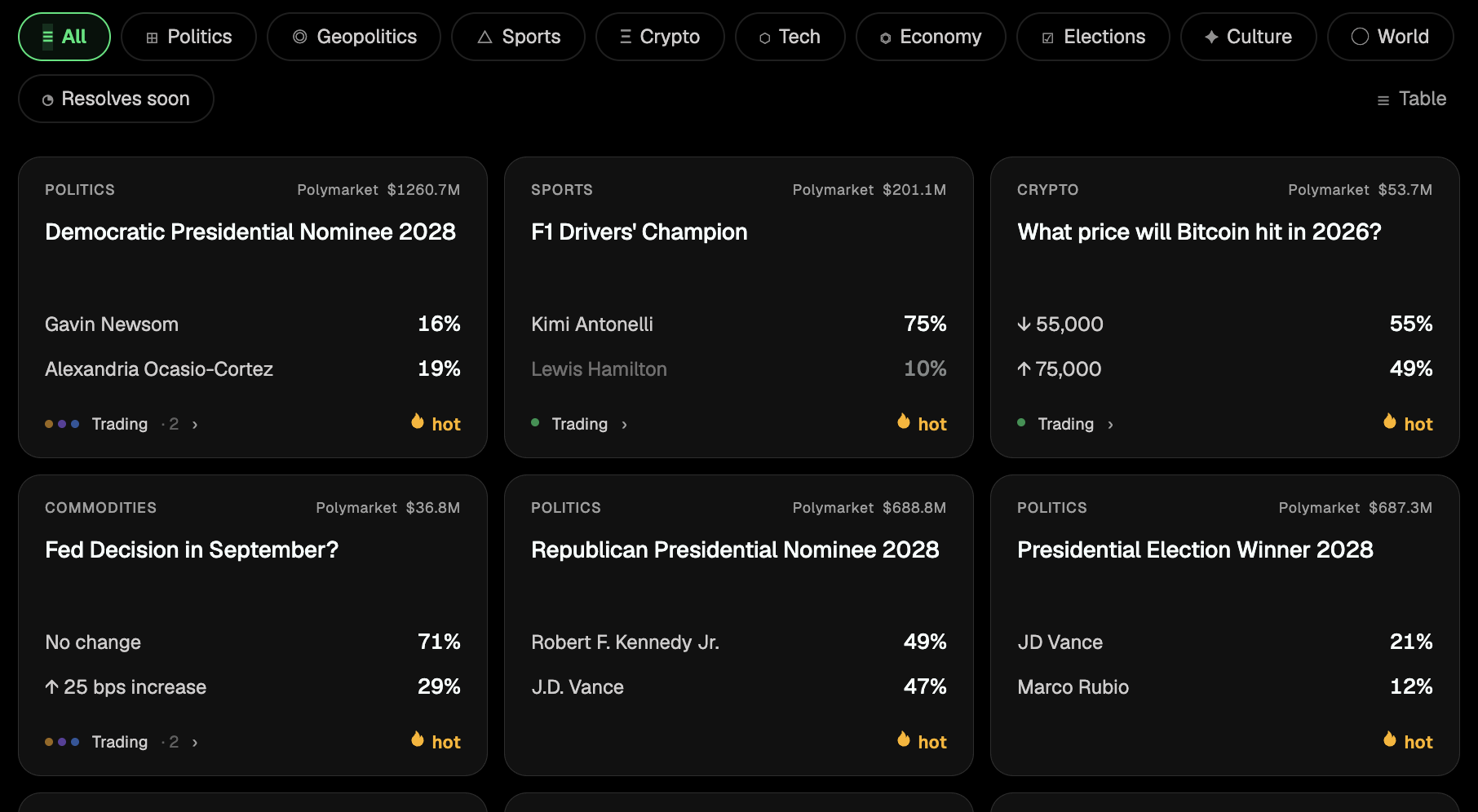
Head to the Situation Room, click the market you are interested in, and place a trade the way you would on Polymarket. Your challenge day counts when you place that first trade, not when you buy the challenge.
2. Meet the conditions
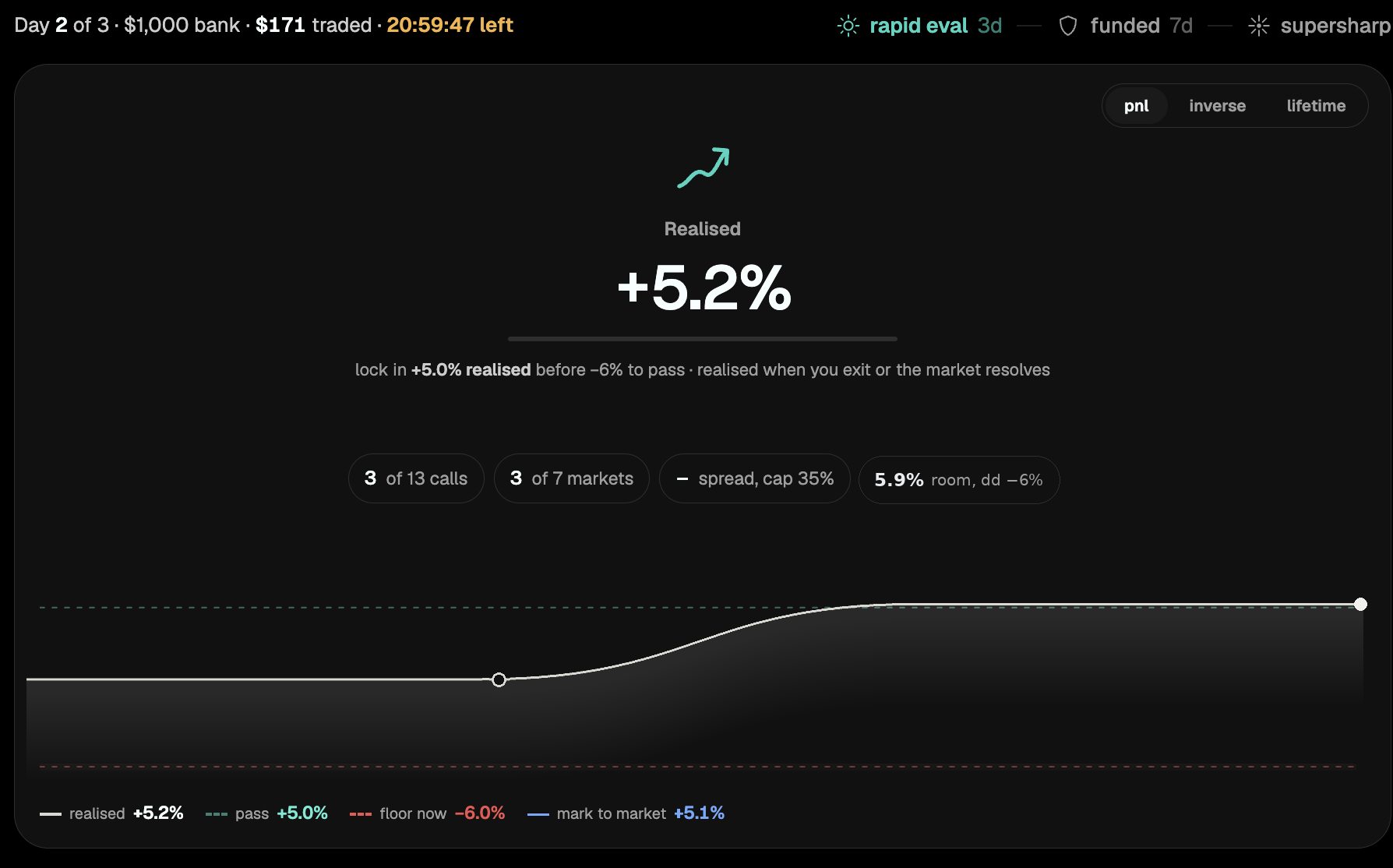
This is where we differ from other trading platform. Your risk is capped at the challenge ticket and nothing more, and clearing the challenge pays out many multiples of that fee. We set the thresholds to be fair, with a win rate higher than the prediction market itself, so your chances here are better than trading it direct.
The portfolio card tracks all of it while you run: realised return against the target, the trailing floor, and the gates for calls made, distinct markets, concentration, and drawdown room. The rules lists all six conditions.
3. Get funded
Hitting the target passes the assessment and opens the funded stage. Pass that too and you keep 80% of the realised profit as a USDC payout. Getting funded.
Making a call
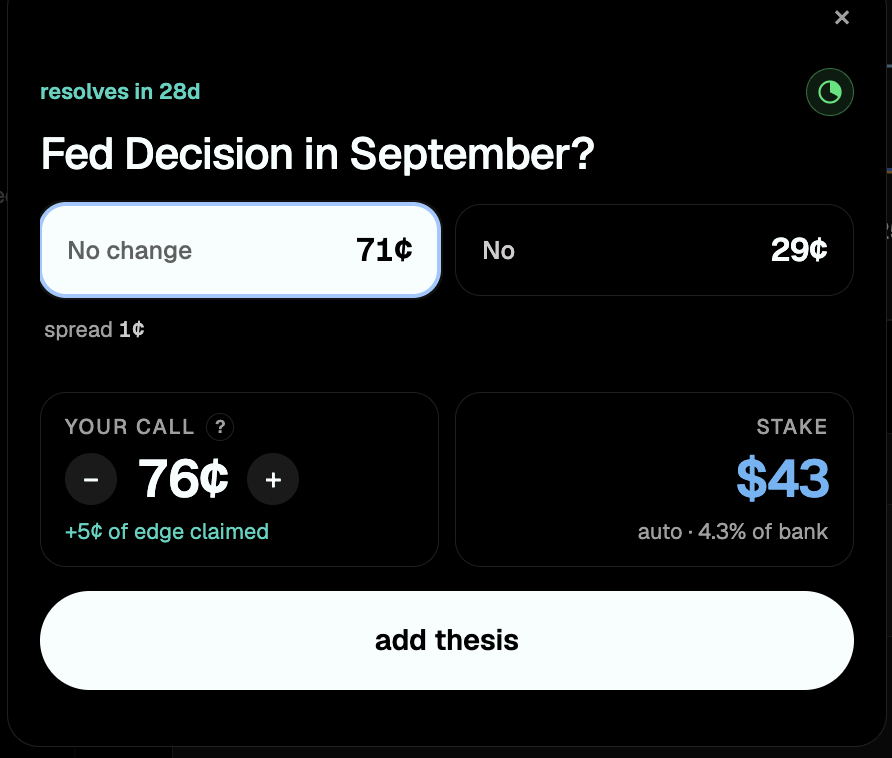
Pick a side, then price it. Your call is your own probability, 1¢ to 30¢ above the market. The stake is sized for you from your edge and your bank, so you never type an amount. spread is the cost of crossing the book.
Add your reasoning
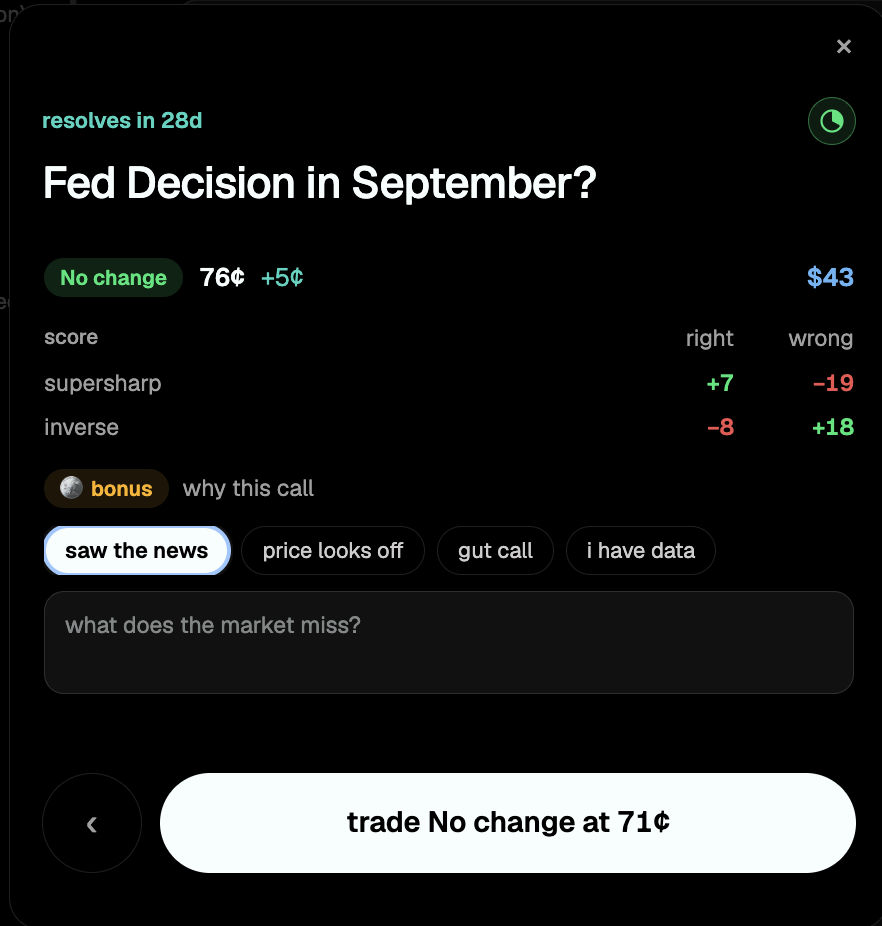
Step two recaps the call and shows what it can score, right or wrong, on both books. Then add up to two reason chips and an optional thesis of 30 to 280 characters. Both earn a bonus. Neither changes the score.
Managing a call
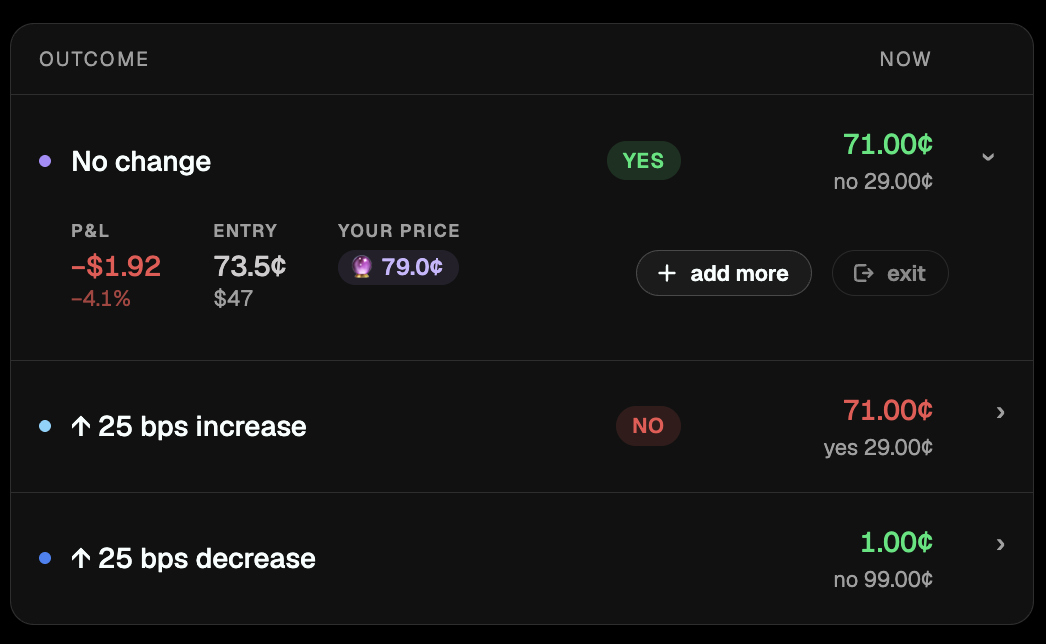
An open call sits on its outcome row with P&L, entry, and your price. add more buys the same side again. exit sells at the current book. Exiting sets your PnL but not your score, because the call is still scored when the market resolves.
Resolves soon and the 24h bench
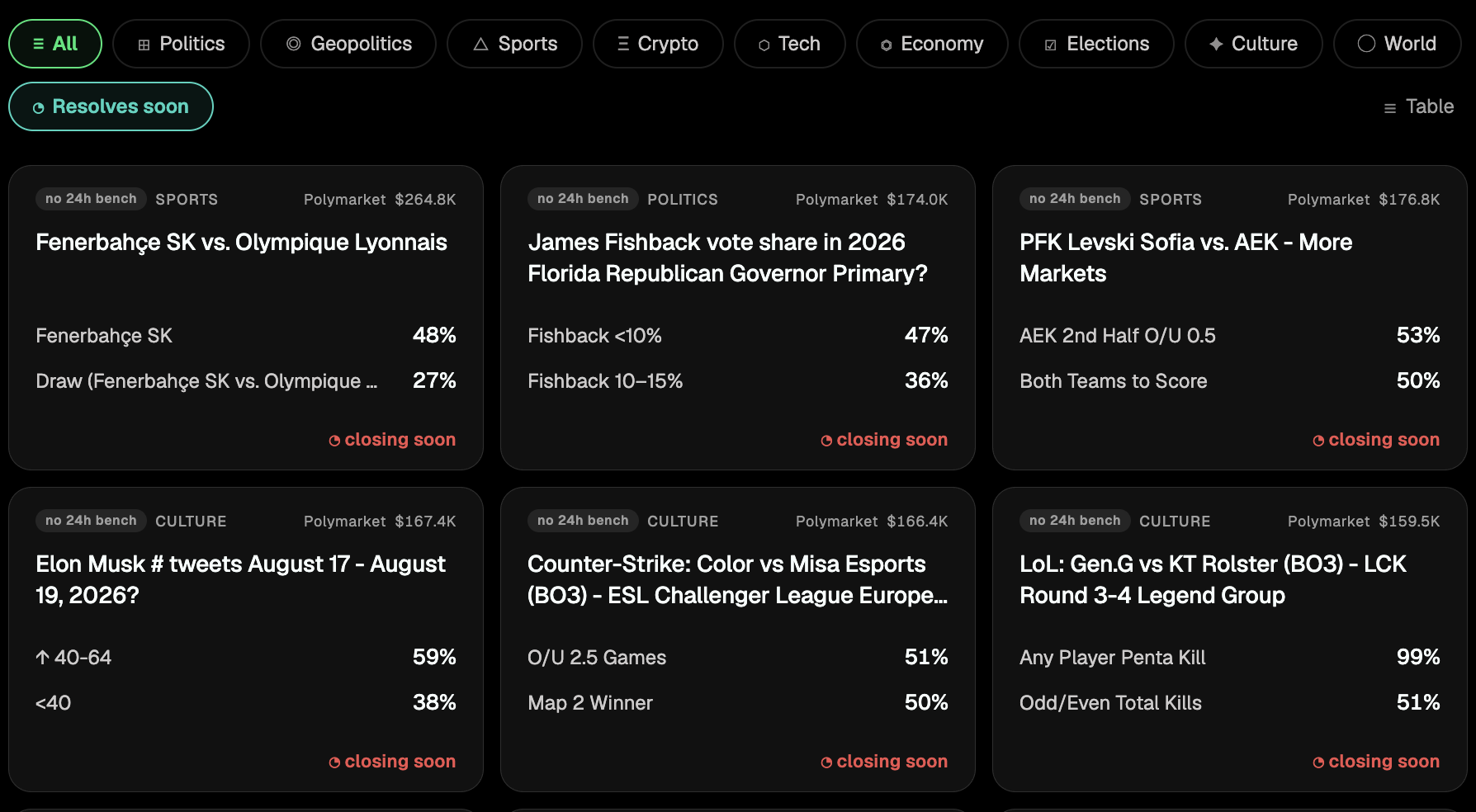
The Resolves soon filter surfaces markets closing within hours, and those cards carry a no 24h bench tag. The bench is the market price 24 hours after your call, and we use it to measure how far ahead of the market you were before resolution settles the question. A market that closes sooner has no bench to read. The call still counts, and still scores at resolution.
The inverse view
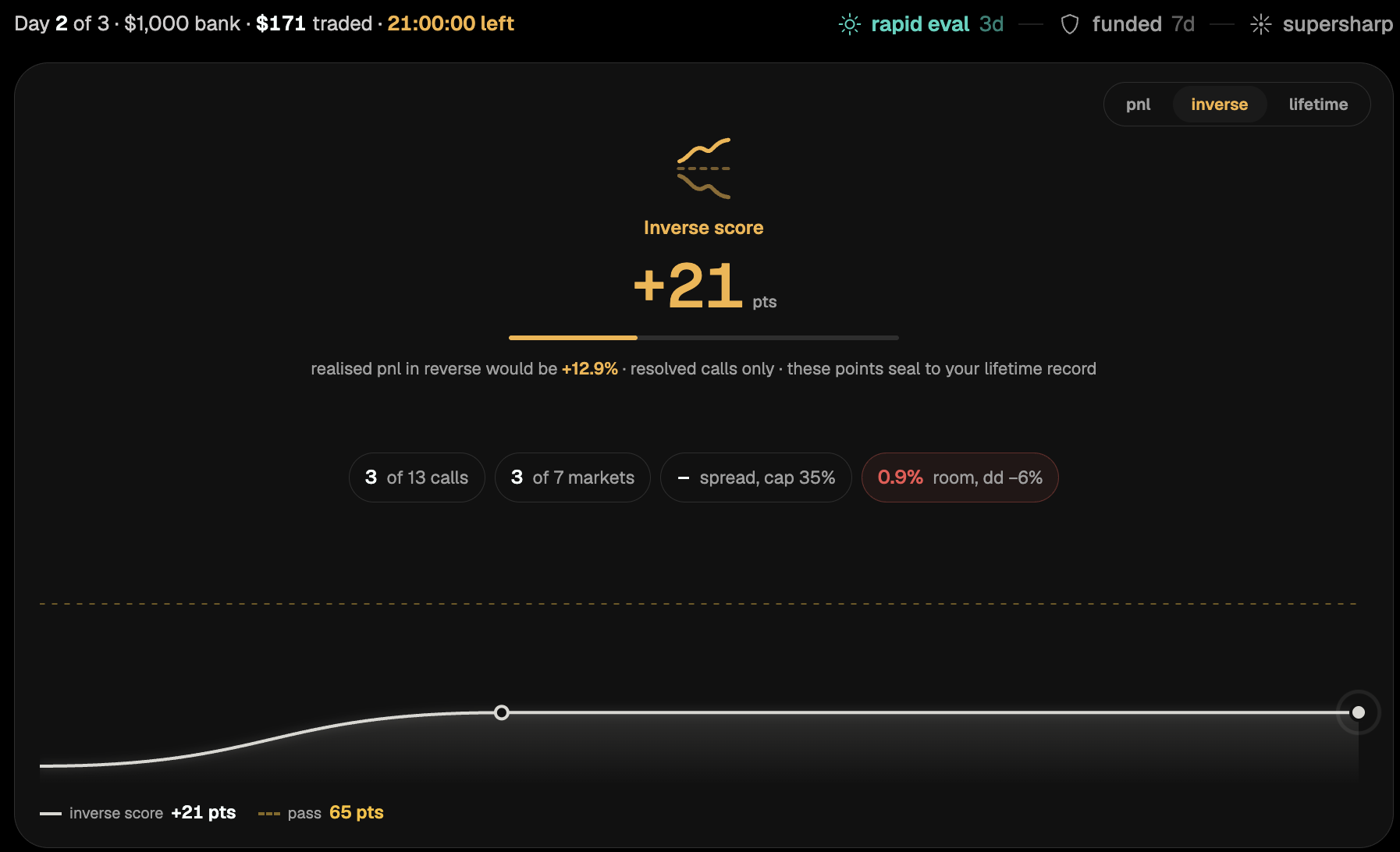
The inverse tab scores the mirror of every call. Points here mean the market kept beating you by the same margin. They seal to your lifetime record too.