Making a call
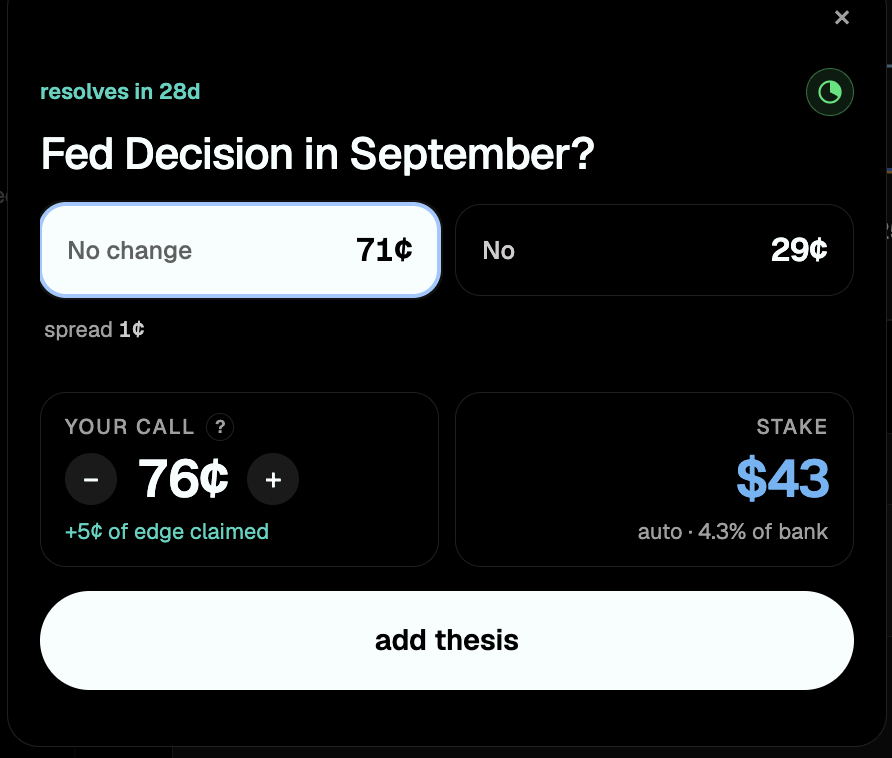
A call has two prices, the market's at that moment (29¢ here) and yours (34¢). The difference is the edge you claim, and the score settles that claim at resolution. The stake is sized automatically.
The thesis field takes reason chips and a short written thesis. Both earn a bonus today, and neither affects the score. A separate lifetime measure for the best reasoning will be published later, built from what you log now.
One scoring rule
Every call is scored against the market price at the moment you made it.
o is 1 if the event resolved yes and 0 if it did not, p is the price you took, and m is the market price at the moment you took it.
Taking the market's own price scores zero, win or lose. You score by pricing differently from the market and being right.
The inverse book
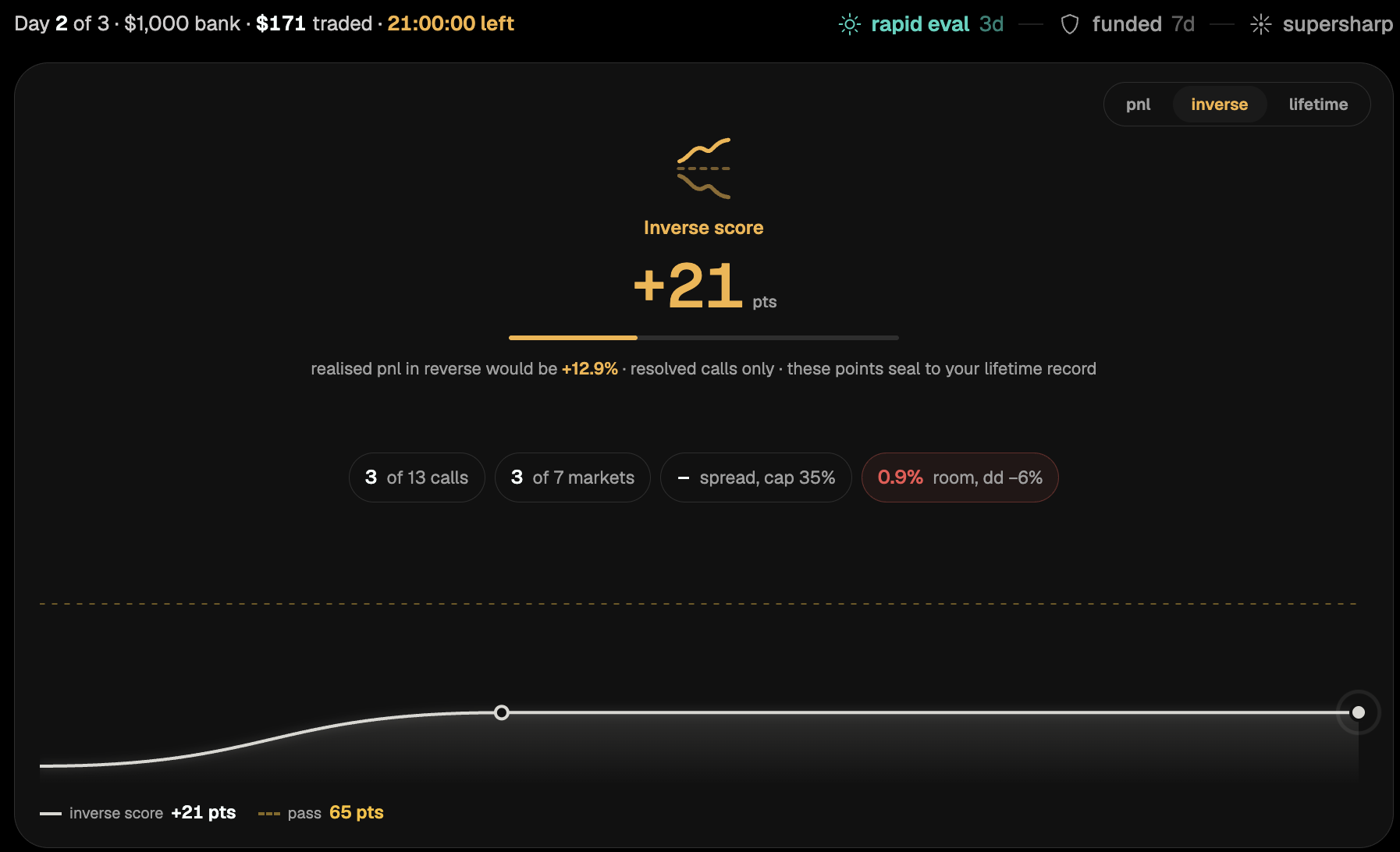
Inverse mode scores the mirror of your price, the same distance from the market on the opposite side.
q is the price you quoted and q∗ is the price your counterpart quoted, the same distance from the market price, m, in the opposite direction.
A losing run can still build a record. A high inverse score means you are consistently wrong, which the rule makes exactly as hard as being consistently right.
Why this measures skill
The log score is strictly proper. Your expected score is highest when you state the probability you actually believe. You cannot improve it by quoting a price you do not hold, and you cannot farm it with volume, because calls at the market price sum to zero no matter how many you make.
The concentration cap stops one event from carrying a pass. The volume gate stops one position from carrying it.
Lifetime record
Every call scores twice, once inside its challenge and once into a lifetime record that never resets. Every tier feeds the same record, and new challenge types will too.
Exits and resolution
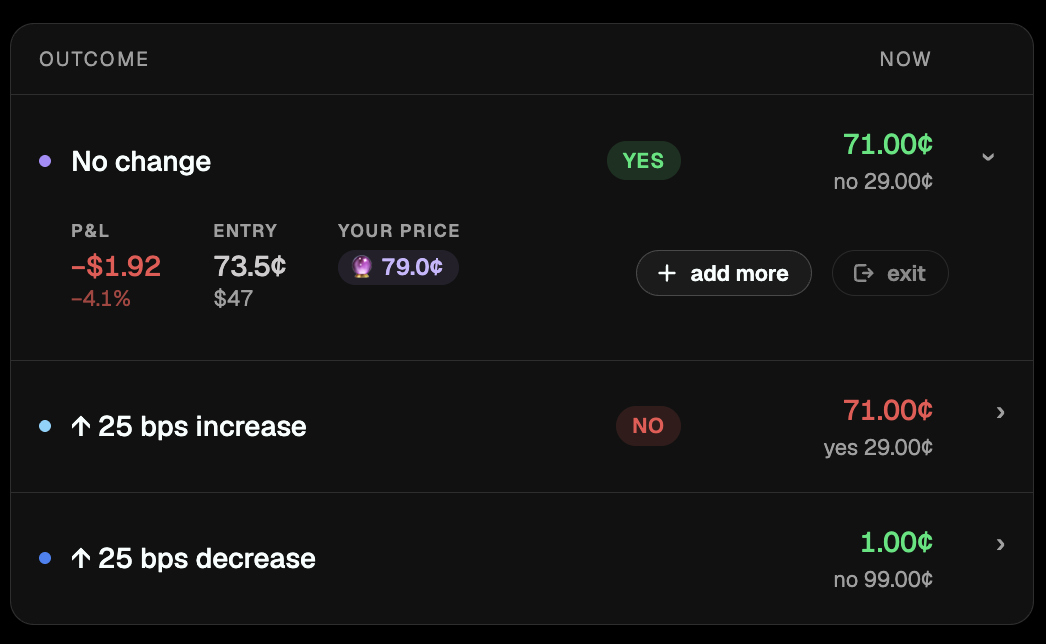
Exiting a trade changes your PnL, not your score. The exit price sets what you made or lost in the challenge. Every call is scored when the market resolves, at the price you entered, even if you exited long before. Leaving a trade early does not take the forecast off your record.
Re-entering a market
After a full exit you can call the same market again. The new call is a new forecast with its own score at resolution. Both count.
Events, not markets
Breadth and concentration count events, not markets. An event is the real-world question, and one event can have several markets, so ten calls across the markets of one event count as one event. The lifetime gates use the same unit: at least 50 resolved distinct events, activity across at least 50 days, and no single event supplying more than 35% of your positive score.